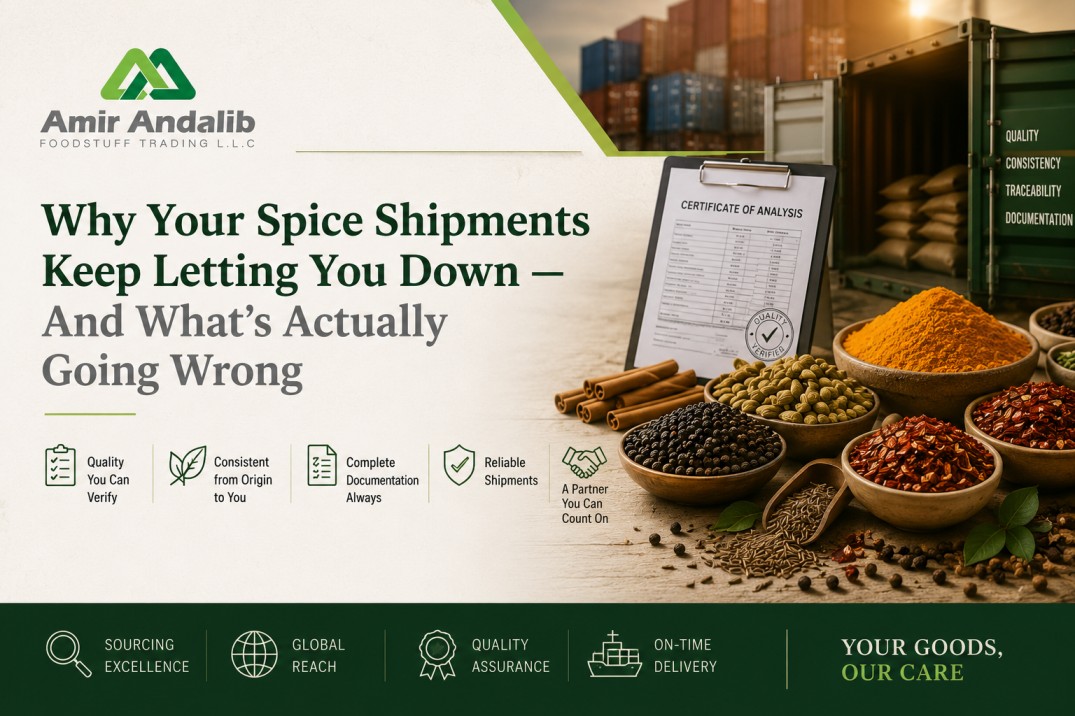
If you’ve ever opened a container of “premium” cumin and caught the faint smell of something that wasn’t quite cumin, or watched a shipment sit in customs for an extra two weeks with no real explanation — you already know the feeling we’re talking about. Not panic. Just the slow, accumulating tiredness of dealing with the same problem, order after order. We hear versions of the same five questions constantly from procurement teams. Here’s what’s actually behind each one.
“Why do spice shipments get rejected at customs?”
Usually not because of one dramatic failure — because of small, undocumented inconsistencies that pile up: moisture content that wasn’t tested before loading, a certificate of origin that doesn’t quite match the paperwork. None of this shows up until the container is already at the port, the most expensive possible place to find out.
What we do instead: Every Tamarix shipment is tested and documented before it leaves origin, not after a customs officer flags it. The Certificate of Analysis you receive is the same document we used to clear the batch ourselves.
“What are the signs of diluted or adulterated spices?”
Weaker aroma than the last batch, inconsistent color bag to bag, needing more of it to get the same flavor result. Individually each looks like bad luck; together, across orders, it’s a pattern — one of the most common ways suppliers quietly cut costs.
What we do instead: Origin, grade, and processing method are fixed per product line, not adjusted batch to batch based on what’s cheapest that month. If something changes, you hear about it from us first.
“What questions should I ask a supplier before a bulk order?”
The honest answer: ask for the documents before you ask about price. Can they show a sample COA from a recent shipment, not a template? Do they know their own port-to-port transit time, or do they guess?
What we do instead: We’d rather answer these questions before you order than after something goes wrong. If you want to see what our documentation actually looks like before committing to anything, just ask.
“What’s the hidden cost of an unreliable supplier?”
It’s rarely the price per kilo — it’s the idle production line, the reformulated product, the audit flag nobody can explain. The “cheaper” supplier often costs more once you count the hours spent managing the fallout.
What we do instead: Consistency is the product, not an add-on to it: same grade, same documentation, same lead time, order after order.
“Does my supplier provide export documentation?”
This should be a yes-or-no question with an immediate answer. If it takes more than a day to confirm, that’s information in itself.
What we do instead: Certificate of Analysis, certificate of origin, and full export paperwork are standard on every Tamarix shipment, not something you request as an exception.
None of this fixes a relationship you’re already frustrated with overnight. But if any of these five questions sound familiar from your own sourcing experience, it’s worth a five-minute conversation before your next order — no pressure, no commitment, just a look at what the documentation actually looks like on our end.
Tamarix — Your Goods, Our Care · Amir Andalib Foodstuff Trading L.L.C. · aafoodtrade.com